Choosing festival cups for your event involves more decisions than most organisers expect. Size, print method, quantity, and lead time all affect your bottom line - and getting any one of them wrong can mean overspending, compliance headaches, or cups that simply do not fit the drinks you are serving.
This guide walks through each decision step by step, so you can place your order with confidence. Whether you are running a 500-capacity community festival or a 50,000-person music event, the principles are the same - match the cup to the drink, the branding to the budget, and the timeline to the season.
Pint vs Half Pint - Which Events Suit Which
The pint cup (568ml to line) remains the default for UK festivals. It is the natural choice for beer, lager, and cider served from draught at main bars, and it is what the majority of attendees expect to receive. The oversized design gives room for a head of foam while still delivering a legally compliant measure.
The half pint (284ml to the line) serves a different purpose entirely. It is the right format for spirits and mixers, cocktail bars, soft drink stalls, and smaller cider measures. Pouring a single gin and tonic into a full pint cup makes the drink look thin and undervalued - the 330ml format keeps the presentation tight and premium. Most event organisers find that ordering a mix of both sizes, weighted towards pints, gives them the flexibility they need across every bar on site.
If you are planning to use the half pint format, take a look at our dedicated half pint festival cups page for available styles and pricing.
Two Pint Cups - The Newest Option
Two pint festival cups are the latest addition to the reusable drinkware lineup, and they solve a very specific problem: queue times. At high-volume events - beer halls, stadium concerts, large outdoor music festivals - the bar queue is the single biggest source of customer frustration. A two pint cup (1136ml) lets attendees order two drinks in one transaction, effectively halving the number of serves your bar staff need to process during peak periods.
They are also popular for group rounds and shared pitchers, making them a strong fit for beer tents and corporate hospitality events. If your bars regularly hit a bottleneck during headline acts or match kick-offs, the two pint format is worth serious consideration.
Plain vs Printed - Deposit Schemes vs Branded
Not every event needs a printed cup. If you are running a deposit-return scheme where cups are collected, washed, and reissued throughout the day, plain unprinted cups are the most cost-effective option. They have a lower unit cost, and because they are generic, any cup can be reissued at any bar regardless of branding.
Printed cups, on the other hand, turn your drinkware into a branding opportunity. A cup with your event logo, lineup artwork, or sponsor branding becomes a piece of merchandise that attendees take home. This works particularly well for annual festivals building long-term brand recognition, or for events with sponsors who want physical exposure across the entire site. Explore our custom festival cups to see what is possible with printed designs.
Single Colour vs Full Colour IML
Once you have decided to print, the next question is how. Single colour printing is the most cost-effective method - it works brilliantly for bold logos, simple text, and graphic designs that do not rely on photographic detail. If your artwork is clean and high-contrast, single colour delivers strong visual impact at a competitive price point.
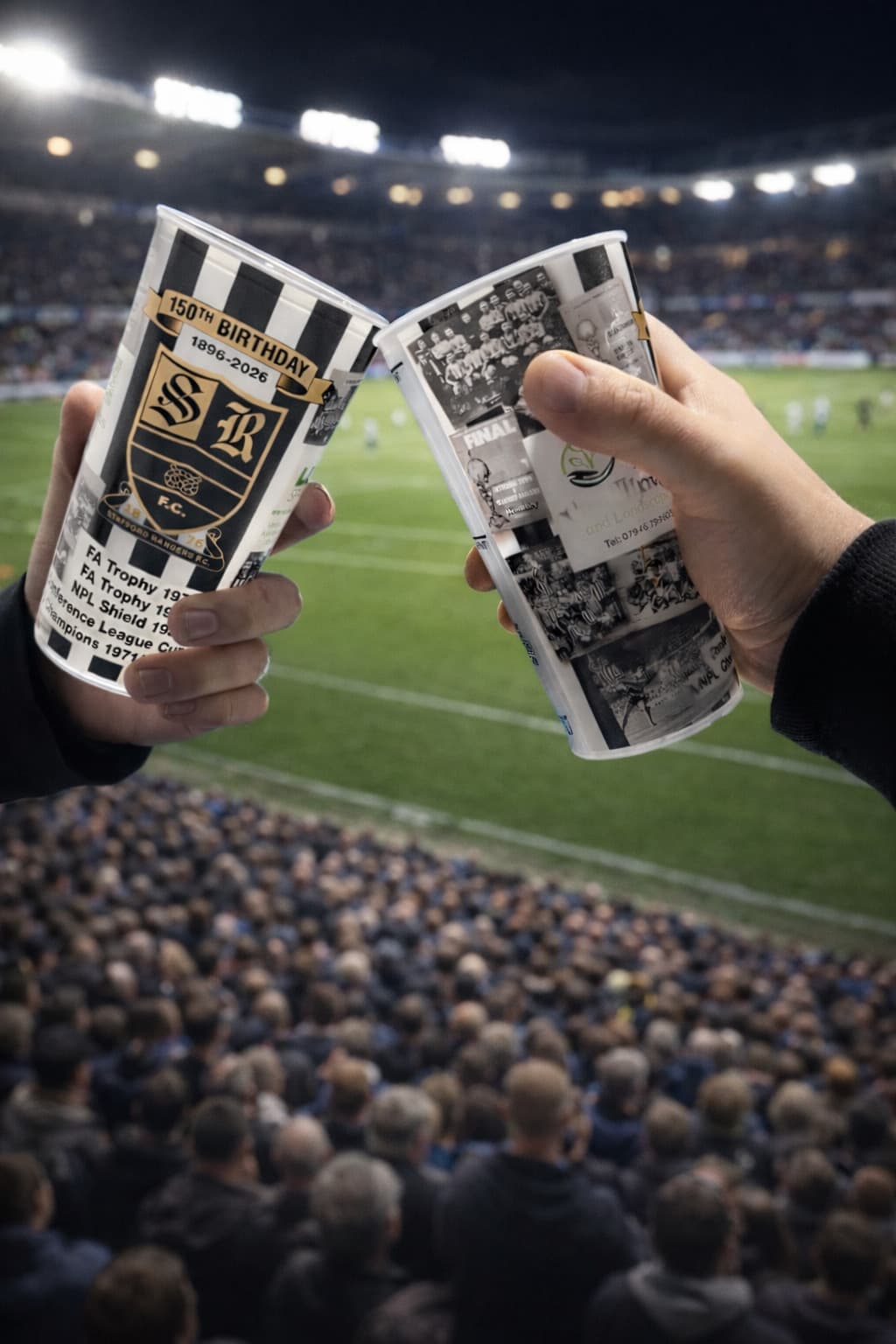
Full colour IML (In-Mould Labelling) is the premium option. The design is printed onto a label that is fused directly into the cup wall during the manufacturing process. The result is a photographic-quality, full-wrap design that completely covers the cup surface. Unlike single colour printing or adhesive labels, IML will never peel, scratch, or fade - even after dozens of washes. For a closer look at what full colour printing can achieve, visit our personalised festival cups page.
UKCA Requirements
Any cup used to serve alcohol by measure in the UK must carry a valid UKCA (UK Conformity Assessed) mark. This is a legal requirement enforced by trading standards, and events have been fined for using non-compliant drinkware. At Drinksmate, all of our cups are UKCA marked during the production process - the marking is moulded or printed directly onto the cup, not applied as a sticker that could wear off. This ensures you are fully compliant from the moment the cups arrive on site.
For full details on the marking standards and what compliance means in practice, see our UKCA certified reusable cups page.
Lead Time Planning
Timing is one of the most overlooked factors in cup ordering. Printed cups require a standard lead time of 10 working days from artwork approval to dispatch. If you need cups sooner, plain stock cups can ship within 48 hours - making them a reliable fallback for last-minute orders or unexpected increases in attendee numbers.
During peak festival season (May through August), production schedules fill up quickly. Ordering early not only guarantees your delivery slot but also helps you avoid rush surcharges that can add significantly to your per-unit cost. If your event date is fixed, the smartest move is to finalise your artwork and place your order as far in advance as possible.