
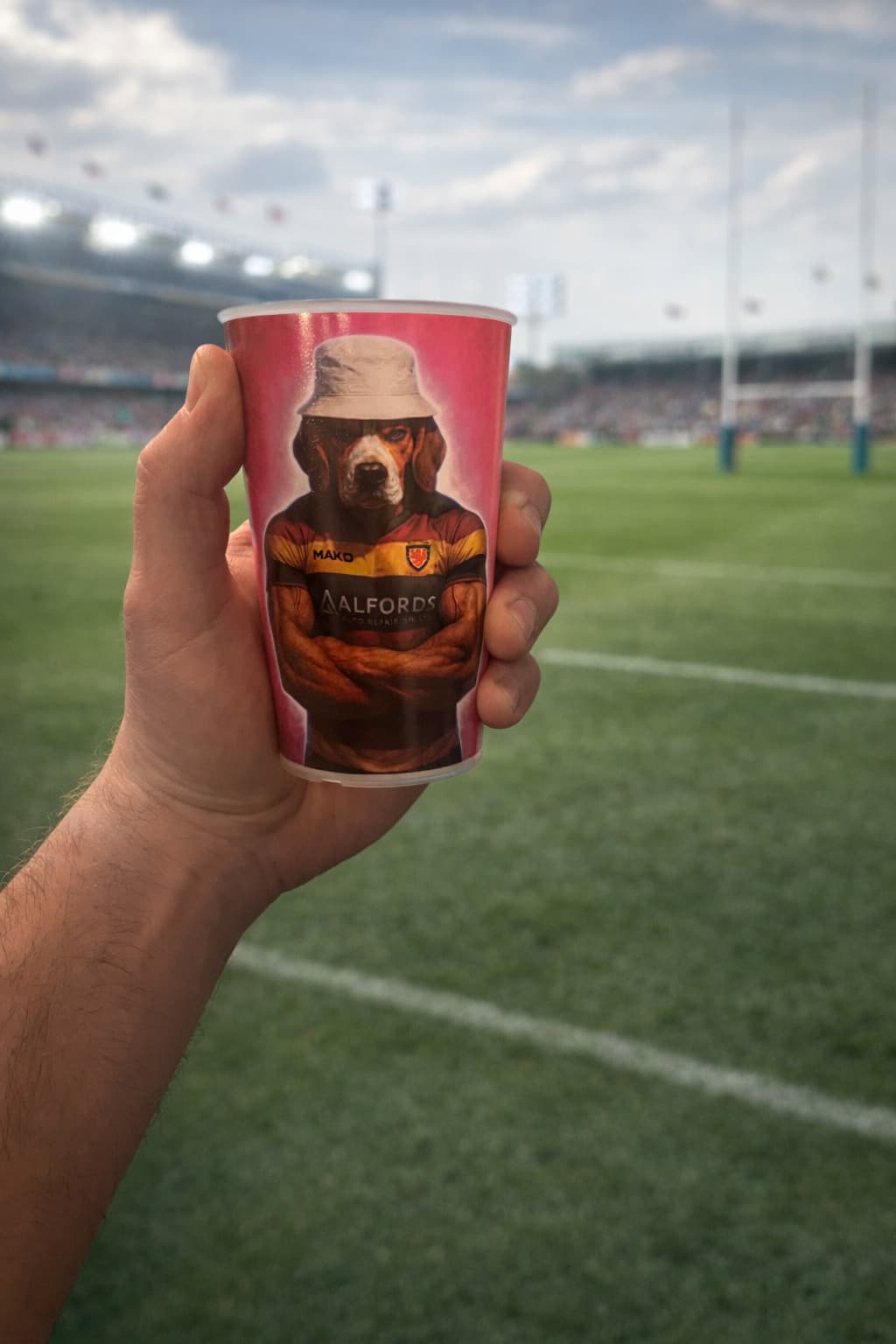
If you're researching reusable festival cups, you've probably already done the maths in your head. Single-use cups are cheap per unit but expensive in waste, hassle and reputation. The real question is whether the reusable version actually holds up across a busy weekend, what to look for, and how to avoid overpaying.
We make these cups. We make them at our factory in Stockton-on-Tees, and over the past three years we've shipped more than ten million of them. So this is the version of the conversation we usually have over the phone with festival organisers, event managers and bar operators when they're sizing up an order.
Short version: yes, they're worth it. The value comes from picking the right size, the right print method and the right minimum, not from the unit price on a quote.
Why festivals are switching to reusable cups
Single-use cups fail two tests at once. They generate visible waste at exactly the moment guests are paying close attention to your bar, and they create a clean-up bill that nobody in event management wants to talk about. Reusable cups remove both problems.
The maths is straightforward. A reusable cup with your branding on it gets used multiple times across a weekend, washed between sessions, and either kept by the guest or returned through a deposit scheme. That single unit replaces a stack of single-use cups, which means your per-serve cost drops well below what disposables look like once cleaning, bin liners and waste collection are factored in.
There's also a reputation angle that's harder to put on a spreadsheet. Sustainability is something most festival audiences notice now. Branded reusable cups make that visible without needing a press release.
What makes a good reusable festival cup
Material first. Our cups are made from rigid polypropylene, BPA-free and food-grade, designed to take repeated commercial dishwasher cycles. Polypropylene is the right material here because it's tough enough to survive being dropped on grass, light enough not to add weight to a pallet shipment, and fully recyclable at end of life.
Print method matters more than people realise. Full colour IML, where the design is moulded directly into the plastic during manufacturing, lasts for the life of the cup and can't peel or scratch. Single colour print sits on the outside surface and is best suited to bold logos and simpler artwork. Both look great when used correctly. Honestly, most buyers default to full colour without thinking about whether their design actually needs it. A clean wordmark in one colour can land just as well as a full bleed wrap, and the unit price is lower.
The thing most buyers miss: pint to line and pint to brim are not the same cup. Pint to line is 568ml with the legal pint mark filling to a printed line, leaving room for a head. Pint to brim is 568ml and fills right to the top. If you're serving draught beer at a licensed bar, you want pint to line. If you're serving soft drinks or cocktails where there's no head, pint to brim is fine. We've had orders come in for the wrong one more times than we can count.
Pint vs half pint, which size works best at events
Bar throughput is the answer most of the time. Pints move twice as fast as half pints because each transaction serves twice the volume. For festival bars dealing with long queues during peak hours, that doubling effect matters more than people expect.
Half pints have a place. They suit wine, spirit mixers, and venues where the guest profile leans towards lighter drinking. They also suit stadium concourses where licensing rules sometimes restrict serving sizes. For a general-purpose festival bar though, ordering pints is usually the right call.
What we tell new buyers: order a pint as your default size, then layer in a half pint or a stackable wine cup as a secondary line for specific bars. Don't try to run the whole event on half pints.
How many washes do reusable plastic cups last
The honest answer is hundreds of commercial dishwasher cycles, and we've seen well-run deposit schemes get three to five festival seasons out of the same stock. The variables are wash temperature, how staff handle them between cycles, and whether the cups are stored dry rather than left damp in stacks.
If you're running a deposit scheme, the print method matters here too. IML survives the full lifespan of the cup because it's part of the cup wall. Surface print is durable but can show wear after enough cycles. For multi-season programmes, IML pays for itself.
What to ask before placing a bulk reusable cup order
When you're sizing a bulk festival cups order, we usually walk customers through three questions. First, what's the actual usage rate per guest per session? Most organisers underestimate this, then under-order. Second, what's the print method matched to the lifespan you need? IML for multi-year stock, single colour for one-off events with bold branding, full colour for somewhere in between. Third, what's the lead time you can realistically commit to?
Standard production runs ten working days from artwork approval. Our Eco Saver tier extends that to 25 working days at the lowest unit cost. We hold substantial stock of the unbranded range year-round at our UK warehouse, shipping plain orders within 5 working days. For under 48-hour turnarounds on urgent printed orders, our sister site Express Cups handles express production runs.
The mistake we see most: orders placed close to an event with full colour artwork that hasn't been signed off internally. The cups can be made fast. The artwork sign-off chain inside your organisation is usually what slows things down. Get that approved before you talk to a manufacturer.
Reusable festival cups make commercial and operational sense for almost any event over a few hundred people. The decisions that matter are the ones made before the order goes in: size, print method, quantity, and lead time. Get those right and the rest takes care of itself. Browse the full reusable festival cups range, or send us a quote with your specifications and we'll come back inside the hour.