An eco cup is a reusable drinking cup, almost always moulded from food-grade polypropylene, designed to be washed and used hundreds of times rather than thrown away after one drink. A single eco cup replaces between 100 and 250 single-use disposables across its working life. In the UK events trade, “eco cup” and “festival cup” describe the same product.
We mould and print eco cups at our factory in Stockton-on-Tees, so the answers below come from the production floor rather than a catalogue. The confusion around the term is worth clearing up first, because it costs buyers money.
What does “eco cup” actually mean?
There is no legal definition, which is the root of the problem. Suppliers apply the label to three very different products:
Reusable polypropylene cups. Moulded, rigid, dishwasher safe, built for 200 or more commercial wash cycles. This is what the events industry means by an eco cup, and it is what we make.
Compostable disposables. Usually PLA-lined paper or bagasse. Single use. They need industrial composting to break down, which most UK event waste streams do not provide, so a large share end up in general waste regardless of the label. Our comparison of compostable against reusable eco friendly cups sets out where each one genuinely wins.
Recyclable disposables. Still single use. Recyclable in principle, contaminated with liquid and food waste in practice.
Only the first is reusable. If a supplier quotes you a price per cup under 10p and calls it an eco cup, you are being quoted a disposable. Reusable cups start higher per unit because they are engineered to survive, and that is the entire point of the economics.
What are eco cups made from?
Ours are moulded from high-grade polypropylene, recycling code 5. Polypropylene is chosen over other plastics for three reasons that matter at an event:
It survives heat. A commercial glasswasher runs hot, and PP holds its shape through repeated cycles where softer plastics warp and go cloudy after a season.
It is shatterproof. Drop a PP cup on concrete at a festival and it bounces. That removes glass risk from crowded spaces, which is why licensing conditions in outdoor and high-footfall areas increasingly push venues toward plastic.
It is food safe. Every cup we make is BPA-free and phthalate-free, and rated for alcohol, soft drinks and hot drinks.
At end of life a PP cup is recyclable through code 5 streams. Because it is a single, unmixed material with no laminate or liner, it recycles cleanly in a way that a PLA-lined paper cup does not.
Are eco cups actually better for the environment?
Yes, but only once they are reused enough times, and the break-even point is lower than most people assume.
A reusable cup carries a higher manufacturing footprint than a single disposable. That is unavoidable: more material, more energy. The footprint is repaid across reuses. Independent life-cycle work on event drinkware consistently puts the break-even against single-use plastic in the region of three to ten uses, depending on wash method and transport distance. A cup used across one three-day festival weekend has already passed it.
Two things move the number in your favour:
Wash efficiency. Bulk commercial washing at the venue beats sending cups off-site. Water and energy per cup drop sharply at volume.
Supply chain distance. A cup moulded in Stockton-on-Tees and delivered to a UK event has a materially shorter freight footprint than one containerised from overseas. This is the part of the calculation most suppliers leave out of their sustainability page.
Where reusables genuinely lose is when they are not reused. Cups ordered for one event, printed with a date, and then binned are worse than disposables. Design for reuse and the maths works. Design for a single weekend and it does not.
Eco cups compared
| Factor | Reusable eco cup (PP) | Compostable disposable | Standard disposable |
|---|---|---|---|
| Uses per cup | 200+ wash cycles | 1 | 1 |
| Shatterproof | Yes | Yes | Yes |
| UKCA line measure available | Yes | Rarely | Rarely |
| Branding durability | Fused into cup wall (IML) | Surface print | Surface print |
| Deposit scheme suitable | Yes | No | No |
| End of life | Recyclable, code 5 | Industrial composting only | General waste or recycling |
| Cost per serve at volume | Falls with every reuse | Fixed, every serve | Fixed, every serve |
How much do eco cups cost?
Pricing is volume driven. Our branded eco cups start from £0.33 per cup at volume on the Eco Saver tier, with a minimum order of 50 cups across both single colour and full colour print. At 2,000 units the same tier puts single colour pint to line at £0.35 and full colour at £0.55.
The unit price is the wrong number to judge, though. The number that matters is cost per serve. A 40p cup used across a season of twelve match days or a three-day festival with a working return scheme costs a fraction of a penny per drink served. A 6p disposable costs 6p per drink served, every single drink, plus the waste contract to dispose of it. Run that calculation over your actual volumes before you compare unit prices.
If you want the full breakdown of what moves the price, our guide to custom branded cup costs, minimums and lead times covers it.
How do UK events actually use eco cups?
Three models, and most large events run a combination.
Deposit return. The customer pays a deposit, typically £2 to £3, refunded when the cup comes back. Return rates at well-run UK festivals commonly land between 70% and 90%. Unreturned cups are effectively sold at the deposit price, which usually exceeds the cup cost several times over.
Souvenir sale. The cup is priced as merchandise over the bar. Common at one-off shows and tours where the artwork has collectible value.
Closed-loop venue stock. No deposit, no sale. The venue owns the cups, washes them, and reuses them across a season. Standard in stadium hospitality, conference centres and pub gardens.
For the operational detail on running the first model, see our guide to branded reusable cups and cost per use.
Getting custom eco cups printed
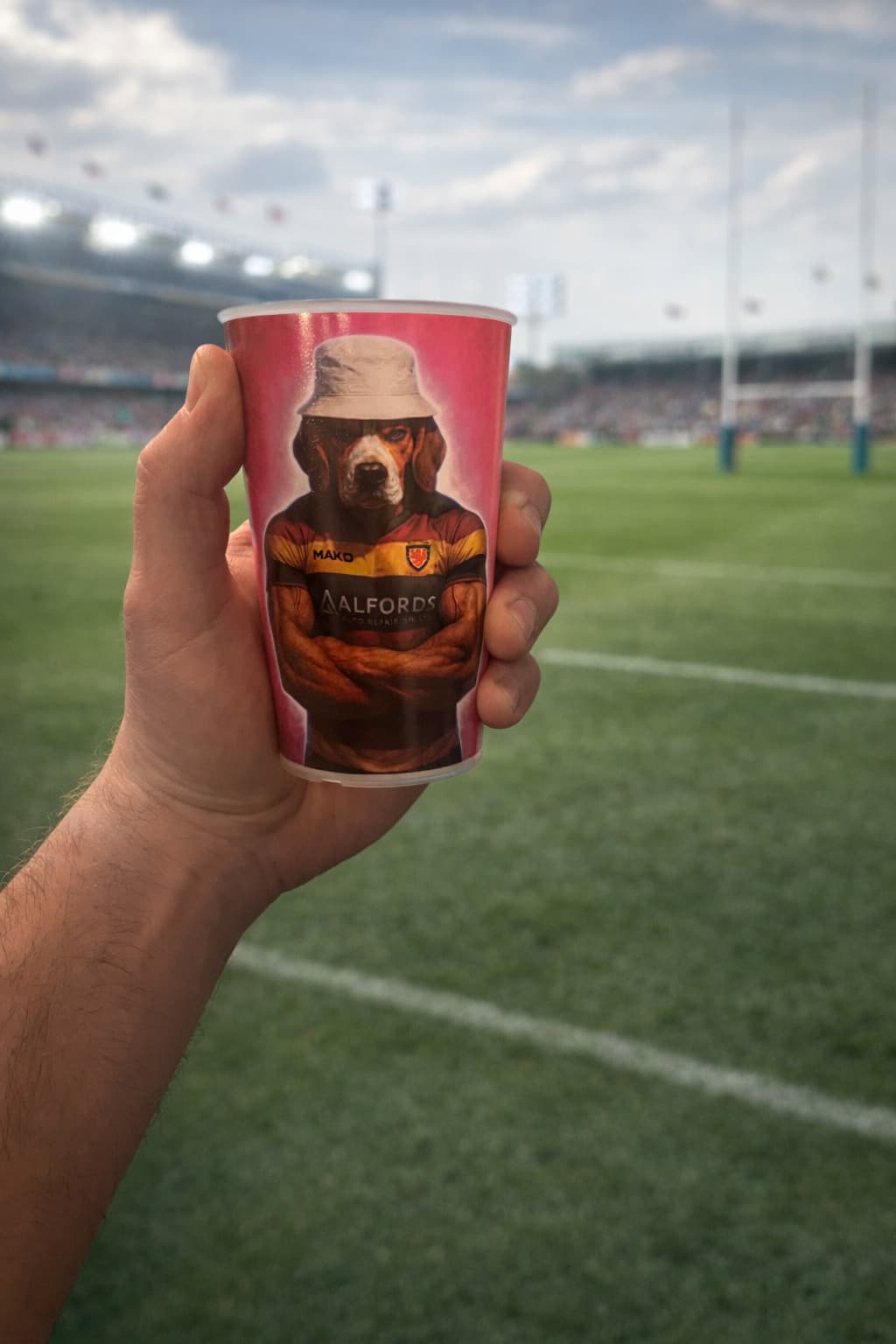
Two print routes. Single colour print is the cost-effective option for a wordmark or crest. Full colour in-mould labelling fuses the artwork into the cup wall during moulding, so photographic and multi-colour designs cost the same as one colour and the print cannot peel, scratch or fade across hundreds of washes.
Standard lead time is 10 working days from artwork sign-off. The Eco Saver tier runs 25 working days at our lowest unit price, which is what most festivals order on when they plan pre-season. Send artwork and we produce a free 3D digital proof before anything goes to production.
Browse the festival cups range, the eco cups hub, or read more about how we manufacture.