

In short
- A reusable cup deposit scheme adds a refundable charge, usually £1 to £3, to the first drink. Customers get it back when they return the cup.
- Your main choices are a refundable deposit, a non-refundable levy, owning your own stock, or hiring cups with washing handled for you.
- Unclaimed deposits are not profit. They pay for lost cups, washing, staff, collection and card fees.
- Schemes succeed on visible return points, clear signs and trained bar staff as much as on the cups.
- Stackable, glasswasher-safe cups built for 200+ commercial washes keep the operation fast and the cost per serving low.
A reusable cup deposit scheme is a simple swap: the customer pays a small refundable deposit with their first drink, keeps the same cup for refills, and gets the deposit back when they hand the cup in. The cup is washed and used again. Done well, it cuts the number of disposable cups you buy and the litter you clear, and it gives your branding a far longer life.
This guide is about cup schemes at festivals, stadiums, venues and events. It isn't about the UK's planned deposit return scheme for drinks bottles and cans, which is a separate government scheme.
We make reusable cups at our factory in Stockton-on-Tees, and we see the same pattern every season: the schemes that run smoothly are the ones that planned the cups, the money and the returns together. Here is how to do that.
How does a reusable cup deposit scheme work?
The mechanics take about thirty seconds to explain, which is part of their appeal.
- First drink: the customer pays the drink price plus a deposit, for example £2, and receives a reusable cup.
- Refills: they bring the same cup back to the bar. No new cup, no extra deposit.
- Return: at the end of the night, or whenever they're done, they hand the cup in at a bar or return point and get their deposit back.
- Turnaround: the returned cups are collected, washed, dried and stored, ready for the next service or the next event.
Some customers will keep their cup, especially when the artwork is good. That isn't a failure of the scheme; a printed cup that goes home is a souvenir with your name on it. You simply need to plan for it, in both your stock and your sums.
Deposit, levy, owned stock or hire: which scheme model suits you?
"Cup scheme" covers several different arrangements. Each one changes how customers behave, how many cups you lose and who pays for washing.
| Model | What the customer does | Best for | Watch out for |
|---|---|---|---|
| Refundable deposit | Pays £1 to £3 extra, gets it back on return | Festivals, stadiums and any event that wants cups back | Refund queues at closing time; needs enough return points |
| Non-refundable levy | Pays a small cup charge and keeps the cup | Souvenir designs, one-off events, anniversaries | The charge must be shown clearly before purchase |
| Owned stock | Uses the cup on site; deposit or levy optional | Venues and repeat events that run every season | You need washing, storage and a stock count |
| Hired with washing | Same as a deposit scheme from the bar side | First-time schemes and one-off large events | Ongoing hire cost; cups aren't branded for you |
| Pooled return network | Returns standard cups to any participating venue | Cities and venue groups working together | Needs shared cups, shared rules and a central operator |
Most of our customers end up with a mix. A festival might own a stock of standard printed pint cups on a £2 deposit, then sell a limited-edition design outright as merchandise. A stadium might own its cups for the season and pay for contract washing between fixtures. If you're not ready to buy, reusable cup hire lets you run a scheme without owning the stock: we deliver clean cups, collect the used ones after your event, wash and dry them at our UK facility and store them until you need them again.
How much should you charge for a cup deposit?
Between £1 and £3 is the usual UK range, and £2 is the most common festival figure. The right number depends on three things.
The value of the cup to the customer. A plain cup is easy to hand back. A full colour cup with this year's line-up on it is something people want to keep, so a higher deposit or a separate souvenir price makes sense.
The price of the drink. A £2 deposit on a £6 pint feels fair. A £3 deposit on a soft drink can feel like a lot, so some events use a lower deposit at family areas.
How easy you make returns. A higher deposit encourages returns, but only if returning a cup is quick. If the refund queue is long, people keep the cup and resent the charge.
Whatever you choose, show the deposit on every bar menu and price board, and print a line such as "Return me to the bar" on the cup itself. Clarity at the till heads off most complaints.
What does the money look like? A worked example
Deposit schemes are often described as a money-maker. The honest answer is that they can contribute to costs, but the money retained is not the same as profit. Here is the arithmetic for 10,000 cups issued with a £2 refundable deposit. It's an illustration, not a forecast.
| Return rate | Deposits taken | Refunded | Retained before costs | Cups to replace |
|---|---|---|---|---|
| 70% | £20,000 | £14,000 | £6,000 | 3,000 |
| 80% | £20,000 | £16,000 | £4,000 | 2,000 |
| 90% | £20,000 | £18,000 | £2,000 | 1,000 |
Read the last two columns together. A lower return rate leaves more money in the till, but it also leaves you more cups to replace before the next event. That is exactly what the retained deposits are for. Out of the retained money you still have to pay for replacement cups, washing and drying, collection, return-point staff, card payment fees and storage.
So the real goal isn't to keep deposits. It's to get cups back, because every cup that comes back is a cup you don't have to buy again. Our guide to branded reusable cups cost per use works through how a cup pays its way over a season.
What does it cost to run a cup return scheme?
Before you set a deposit, put a figure against each of these. Some will be zero if you hire, and some will be zero if you wash on site.
| Cost line | What it covers | How to keep it down |
|---|---|---|
| Cups | Your opening stock, bought or hired | Order early on Eco Saver; buy cups built for 200+ commercial washes |
| Replacements | Cups kept, lost or damaged | Easy returns, clear signs and a deposit worth reclaiming |
| Washing and drying | Food-safe cleaning between services or events | Glasswasher-safe cups; contract washing if you lack the kit |
| Staff | Return points, refunds, counting | Return at every bar, not just one tent |
| Collection and transport | Moving dirty and clean cups | Stackable cups and crates to save space |
| Storage | Between events and seasons | Clean, dry, counted stock; stored with us if space is tight |
| Payment fees | Card fees on deposits and refunds | Factor them into the deposit you set |
How do you set up return points and get cups back?
Return rates are won or lost on site. The cups can be perfect and the deposit sensible, and the scheme still disappoints if handing a cup back is a chore. These are the basics that make the difference.
- Return at every bar. Customers will return a cup where they buy a drink. A single return tent at the far side of the site loses cups.
- Signs that say exactly what happens. "£2 deposit, refunded when you return your cup" at every bar, entrance and return point.
- Print the message on the cup. "Return me to the bar" on the artwork reminds people every time they drink.
- Train staff on refunds. Quick, friendly refunds at closing time stop the end-of-night queue that sends cups home in pockets.
- Separate cups from general waste. Dedicated bins or crates at every bar keep returned cups clean and countable.
- Count in and count out. Know how many cups you issued and how many came back, so you can plan replacements properly.
How are reusable cups washed, stored and counted?
A cup only becomes reusable when it can be collected, washed, dried and redistributed quickly. Used cups should be kept apart from general waste and washed using a process suitable for food-contact items, then dried fully before they are stacked and stored.
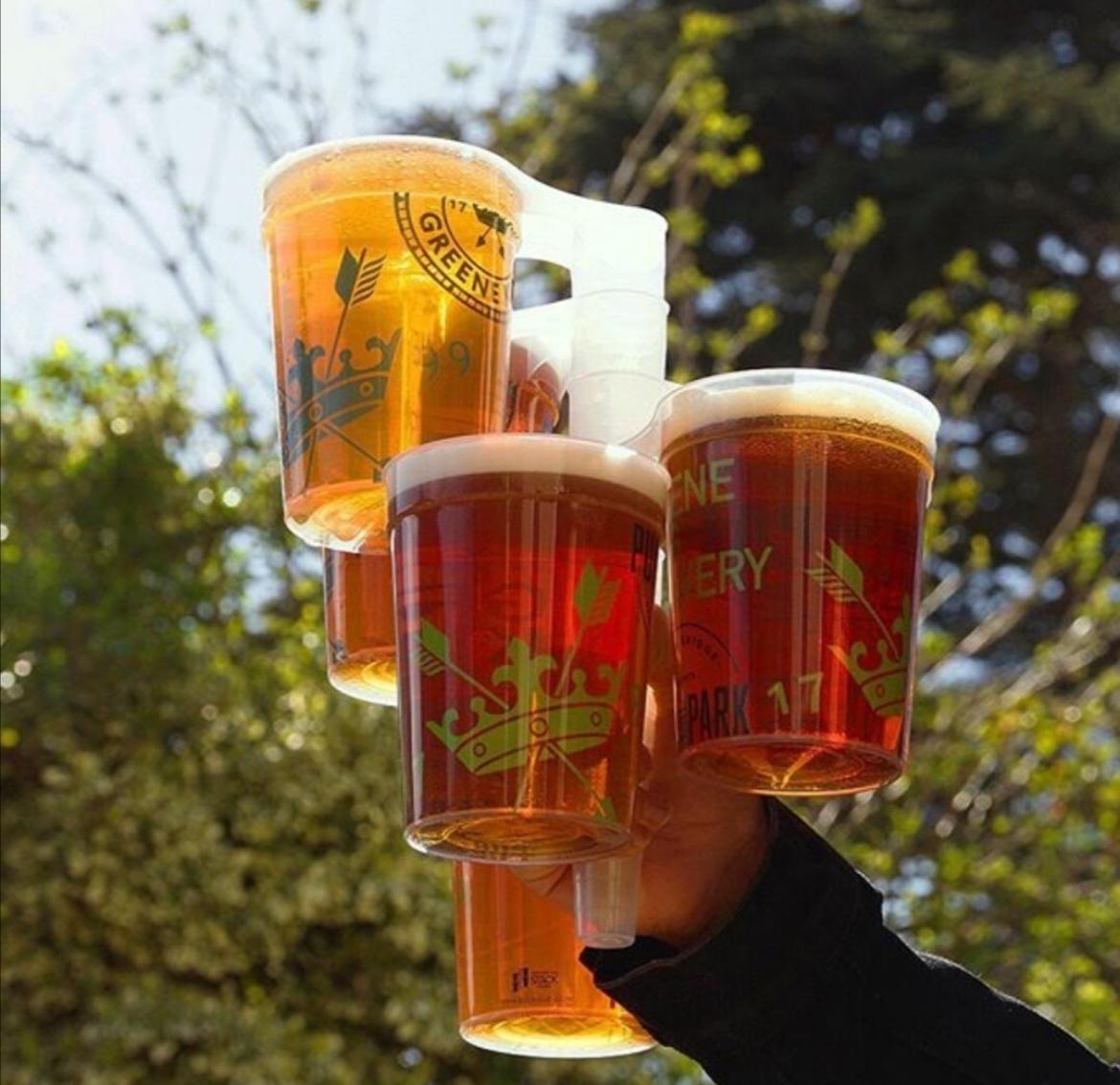
Our cups are glasswasher safe and built for 200+ commercial dishwasher cycles, and our pints stack without sticking, even wet or warm from the wash, which matters when thousands of cups move through a bar in an evening. Our Stack Cup™ range goes further, with handles that clip together so staff and customers can carry a round in one hand.
If you don't have the washing kit or the storage space, you don't need to build it. We offer contract washing and storage for cups you own, as well as hire: clean cups delivered to your bars, used cups collected in the crates we provide, washed and dried at our UK facility and stored until next time. See cup hire, washing and storage for how it works.
Can QR codes track reusable cups?
Yes, with one important condition. We can print a unique QR code into the artwork of each cup, so every cup carries its own identifier. That opens the door to individual cup tracking, return monitoring, stock reconciliation and promotions. But a printed code can't record anything on its own: you also need a scanning system and a database that logs each scan. For many events a QR code works best as a link to the event schedule, a competition or your deposit terms. See QR code cups for what can be printed.
How many cups do you need for a deposit scheme?
Plan from peak demand at the bars, not total attendance. At any moment some cups are in customers' hands, some are being refilled, some are in the wash and some have gone home. A practical starting point is your expected peak number of drinkers, plus enough extra stock to cover cups in circulation and in the wash, plus a buffer for losses at your expected return rate.
Most deposit schemes run on pints and halves, with 2 pint cups at busy bars to cut queue time. Our festival season cup planning guide sets out the sums in detail, and if you're ordering large volumes, read our bulk and wholesale festival cups guide too.
Which cups work best for a deposit scheme?
- UKCA certified measures. If you sell alcohol by the pint or half, your cups need to be legal measures. Our pint, half pint and 2 pint cups are UKCA certified.
- Built for repeat washing. Shatterproof, BPA free polypropylene, rated for 200+ commercial dishwasher cycles.
- Stackable. Faster bar service, easier collection, less storage space.
- Printed to be returned, or kept. Full colour in-mould labelling makes a cup people value. Pair a standard design on deposit with a limited edition sold as merchandise.
Browse reusable festival cups, festival cups or stadium and arena cups to see the range. Every cup is made in Stockton-on-Tees, orders start from 50 cups, and you choose between Standard in 10 working days and Eco Saver in 25 working days, both counted from proof approval and payment. Our lead times and pricing page has the detail, and our sustainability page explains how reuse fits into a wider waste plan.